

The research team has made significant progress in the field of high-fidelity frequency conversion
Recently, the research group has made significant progress in the study of high-fidelity frequency conversion. The related research results titled "High-fidelity frequency converter in high-dimensional spaces" were published in the Laser & Photonics Reviews journal on July 5th. Professor Yuan Jinpeng and doctoral student Wang Xuewen are the co-first authors of the paper, while Professor Wang Lirong and Professor Chen Gang are the co-corresponding authors. Professor Jia Suotang and Professor Xiao Liantuan provided important guidance for this work.
The structured light field, by expanding and combining the photon degrees of freedom, continuously develops more encodable dimensions from the spatial structure, providing the possibility for the expansion of communication channels and data capacity. The high-dimensional frequency converter, as the foundation of high-capacity frequency interface, is the key to connecting various physical systems operating in different frequency domains. With the development of multi-dimensional information encoding, the continuous pursuit of high fidelity is limited by the inherent basic properties of degrees of freedom, especially the dependence of nonlinear processes on amplitude and polarization, which is crucial for reliably executing information transmission. Therefore, converting high-dimensional light fields between different frequency bands while completely preserving their characteristics remains a bottleneck. The perfect Poincaré beam combines spin angular momentum and orbital angular momentum, achieving information encoding of spatial amplitude, spatial phase, and spatial polarization degrees of freedom, and constructing mode-independent nonlinear interactions by utilizing its transverse structure invariance. Compared to traditional Poincaré beams, it can effectively overcome distortions during the conversion process.
The research team utilized the perfect Poincaré beam and the Sagnac nonlinear interferometer, through the four-wave mixing process of rubidium atoms, to achieve a high-fidelity frequency converter in a high-dimensional space, successfully converting any Poincaré state from the near-infrared band to the blue-violet band. The theoretical simulation of the frequency conversion process of the traditional Poincaré beam and the perfect Poincaré beam was conducted, and the fidelity was quantitatively characterized based on the spatial Stokes measurement method. The results showed that the traditional Poincaré beam was prone to distortion during the conversion process, especially for asymmetric OAM states, while the perfect Poincaré beam effectively solved this problem. In the experiment, a parameterally precisely controllable perfect Poincaré beam was prepared using a self-stabilizing Mach-Zehnder interferometer and a liquid crystal spatial light modulator, and was injected in the same direction as another Gaussian-type pump light into the Sagnac nonlinear interferometer. Through the construction of two orthogonal four-wave mixing processes, the frequency conversion of any Poincaré state was achieved. Six polarization components were extracted from the signal light and the output light to analyze their spatial topological structure, and it was ultimately proved that the fidelity of any Poincaré state was above 99%. To further increase the system capacity, the mode multiplexing of the dual-ring structure and the lattice-like structure perfect Poincaré beams was realized using the radial degree of freedom.
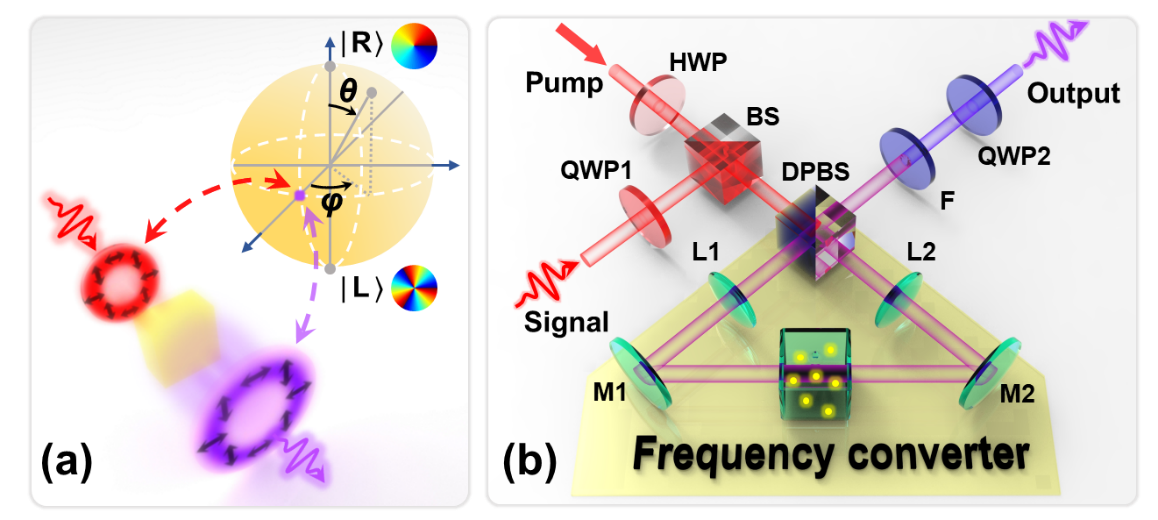
Figure 1 Schematic diagram of the high-dimensional frequency converter
(a) Schematic diagram of photon Poincaré state frequency conversion; (b) Schematic diagram of the high-dimensional frequency converter experimental setup.
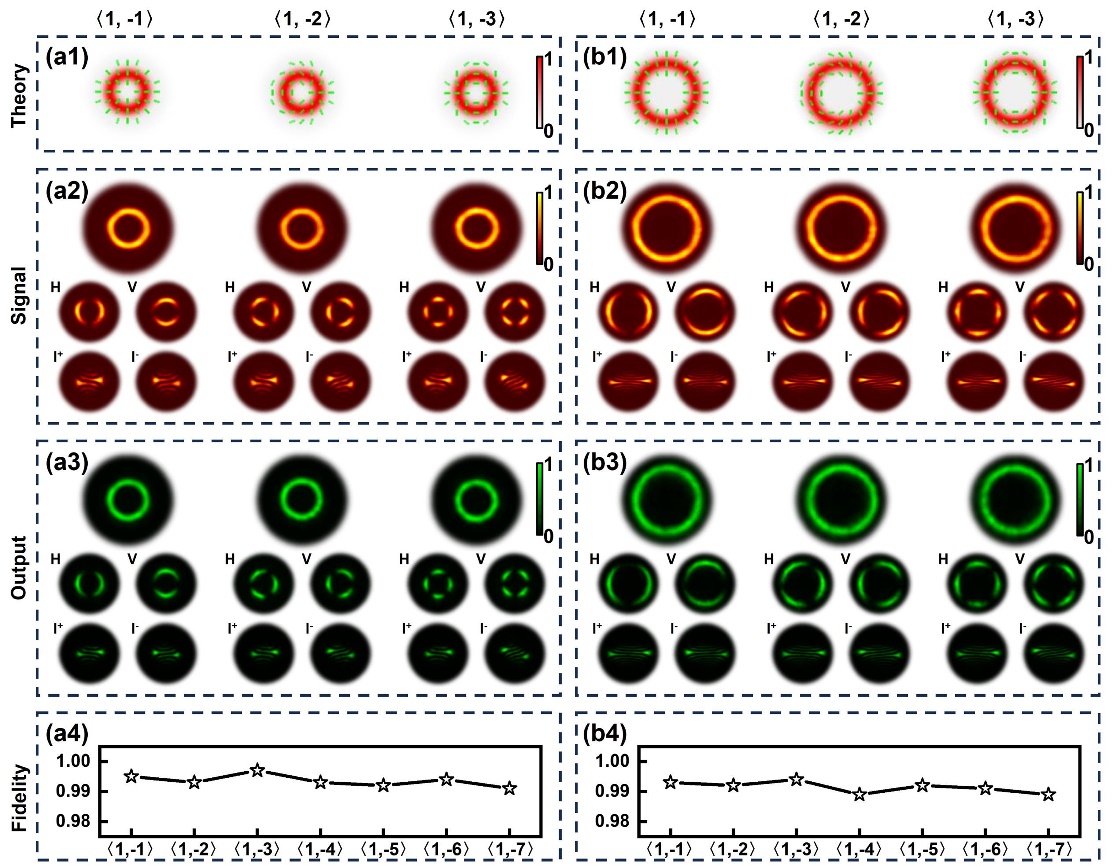
Figure 2: Theoretical Simulation and Experimental Results
(a1-a4) and (b1-b4) represent the frequency conversion of the perfect Poincaré beams under two different sizes.
This work has received support from the Key Research and Development Program of the Ministry of Science and Technology, the Major Project of the Innovation-driven 2030 Program, the National Natural Science Foundation of China, the Key Discipline Construction Fund of Shanxi Province under the "1331" Project, the State Key Laboratory of Quantum Optics and Optical Quantum Devices, as well as the Collaborative Innovation Center for Extreme Optics jointly established by the provincial and ministerial authorities.This work has received support from the Key Research and Development Program of the Ministry of Science and Technology, the Major Project of the Innovation-driven 2030 Program, the National Natural Science Foundation of China, the Key Discipline Construction Fund of Shanxi Province under the "1331" Project, the State Key Laboratory of Quantum Optics and Optical Quantum Devices, as well as the Collaborative Innovation Center for Extreme Optics jointly established by the provincial and ministerial authorities.
Paper Address: https://doi.org/10.1002/lpor.202400368