

The research group has made significant progress in the preparation and control of vortex arrays in coherent atomic media
Recently, the research group published a research paper titled "Creation and control of vortex-beam arrays in atomic vapor" in the journal Laser & Photonics Reviews, with an impact factor of 10.947. Associate Professor Yuan Jinpeng and doctoral student Zhang Hengfei are the co-first authors of the paper, Professor Wang Lirong and Professor Chen Gang are the co-corresponding authors, and Professor Jia Suotang and Professor Xiao Liantuan, among others, participated in the work together.
Vortex beams, characterized by helical phase fronts and specific orbital angular momentum, offer new controllable degrees of freedom for light field manipulation. Vortex arrays, composed of multiple vortex beams, have higher controllability and broad application prospects in fields such as optical micro-manipulation and optical communication. Currently, the general methods for preparing vortex arrays mainly involve the use of diffraction optical elements based on the fork principle, such as Dammann gratings, fork gratings, holographic phase plates, and metasurface materials. These are typically constructed based on pre-simulated parameters, resulting in vortex beams/vortex arrays with limited controllable degrees of freedom, which greatly restricts the large-scale application of vortex arrays. Electromagnetically induced photonic lattices are a new type of artificial periodic dielectric structure induced by applying a standing wave coupling field on the basis of the electromagnetically induced transparency effect. Compared with solid-state structures, they have the new features of flexible tunability and easy reconfigurability, effectively compensating for the limitations of solid-state periodic structures in light field manipulation.
The research team experimentally utilized Gaussian beams and vortex beams to interfere in a three-level ladder-type rubidium atomic coherent medium, forming a novel fork-shaped photonic lattice through electromagnetically induced transparency. By diffraction of the incident beams and superposition of spiral phases, multi-dimensional tunable vortex arrays were obtained. Firstly, a one-dimensional fork-shaped photonic lattice was induced in the atomic medium by constructing a standing wave field propagating along the x-direction, achieving the preparation and manipulation of one-dimensional vortex arrays. It was found that when the incident beam was a Gaussian beam, the topological charge of the generated vortex beam was determined by the number of bifurcations of the interfering light field and the diffraction order. By adjusting the experimental parameters, the diffraction efficiency of the generated vortex beams at each order could be effectively controlled. Then, a standing wave field propagating along the y-direction was introduced and overlapped with the standing wave field propagating along the x-direction to induce a two-dimensional fork-shaped photonic lattice, achieving the preparation of a two-dimensional vortex array. A high-resolution 3×3 square vortex array was experimentally obtained. Due to the Gaussian beam being the incident beam, the beams in the array were symmetrically distributed with respect to the central beam. The topological charge of each beam was determined by the standing wave fields in both directions and the diffraction order. This array had excellent tunability, and due to the increase in dimension, the manipulation effect was more obvious. Subsequently, the incident beam was changed from a Gaussian beam to a vortex beam, and the topological charge of each vortex beam was also affected by the topological charge of the incident beam, obtaining vortex arrays with richer information. Due to the system's excellent phase regulation mechanism, the diffraction efficiency of the generated vortex beams could be effectively improved by adjusting the phase characteristics of the incident vortex beams. Theoretically, the array was extended to larger dimensions such as 5×5 and 7×7, which is of great significance for further enhancing the practical application of tunable vortex arrays. In summary, the innovation of this scheme is as follows: First, the atomic medium has better tunability compared to solid materials; second, the design of multi-beam interference has diversity and can be used to explore more complex geometric structures of vortex arrays; third, the system has multiple degrees of freedom such as real-time tunable orbital angular momentum, intensity, and spatial distribution, which can be widely applied in optical manipulation, optical processing, optical communication, and other fields.
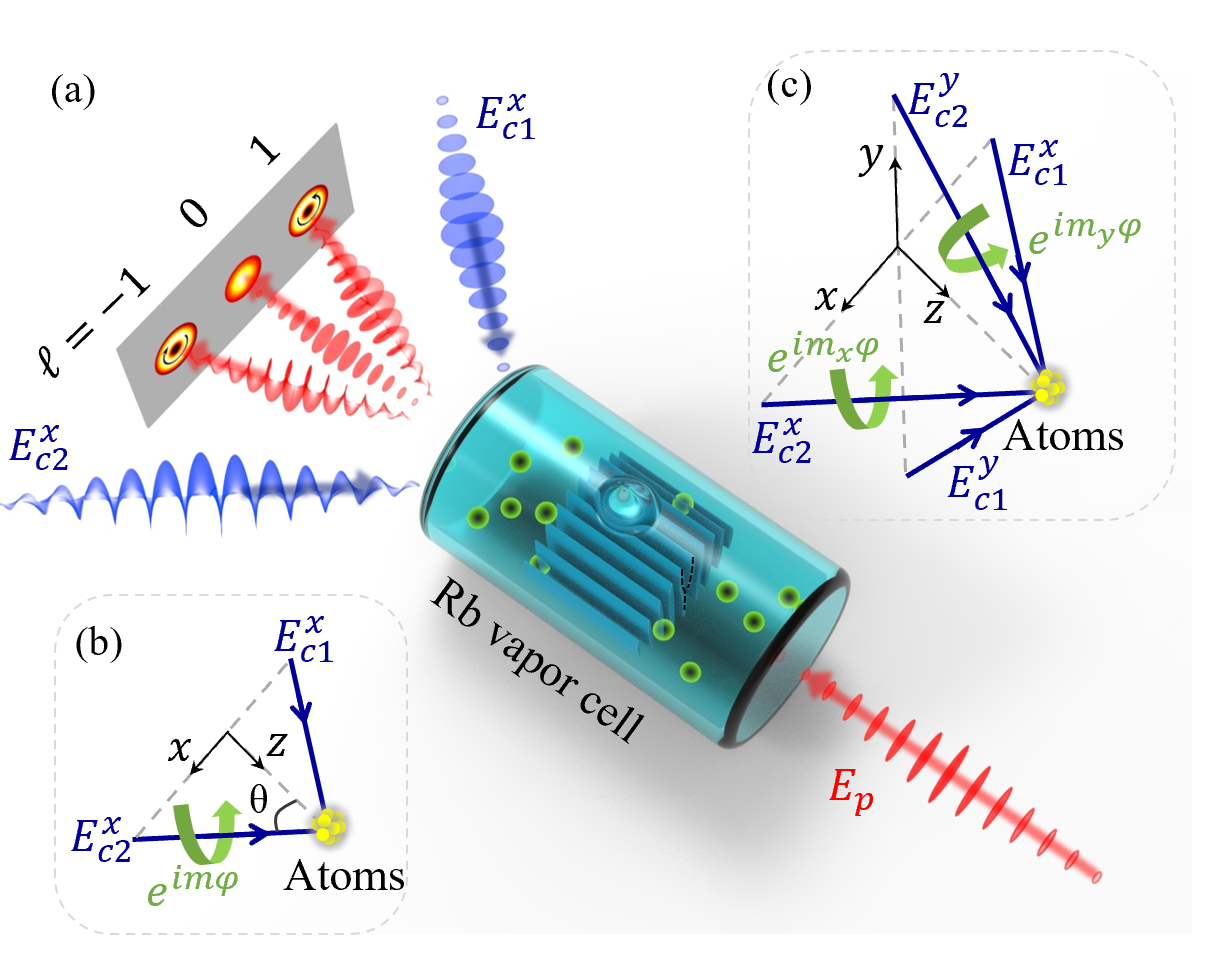
Figure 1 Schematic diagram of the experiment
(a) Schematic diagram of one-dimensional vortex array generation; (b) and (c) are the spatial distributions of the interfering beams of one-dimensional and two-dimensional standing wave fields, respectively.
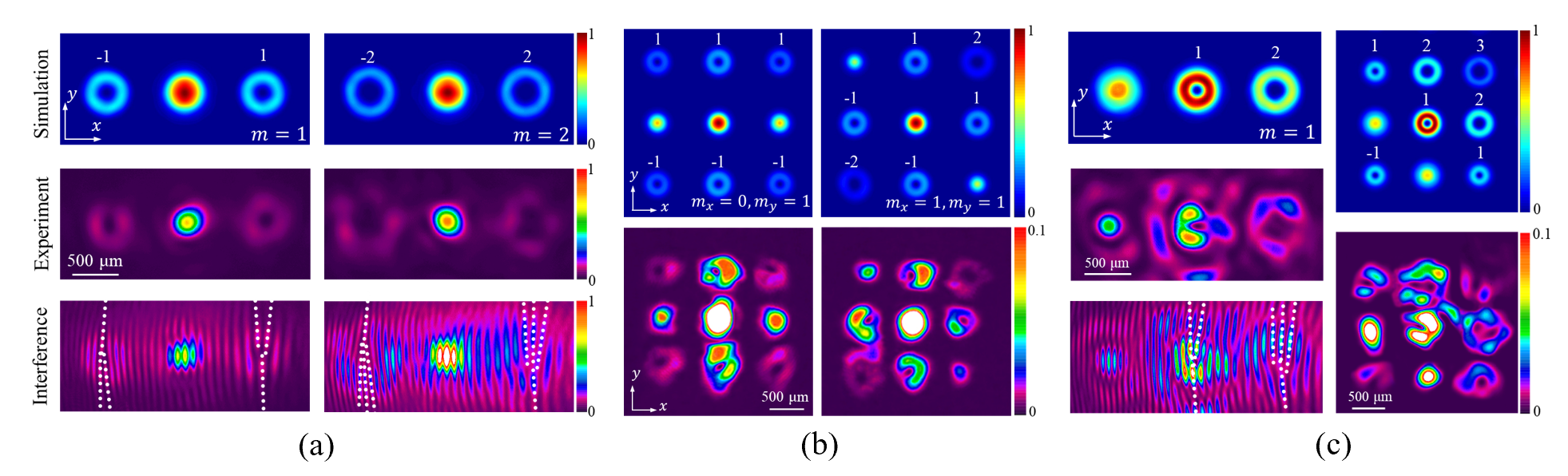
Figure 2: Theoretical Simulation and Experimental Results
(a) and (b) represent one-dimensional and two-dimensional vortex arrays respectively when the incident light beam is a Gaussian beam; (c) represents the vortex array prepared when the incident light beam is a vortex beam.
This achievement was supported by projects such as the National Key Research and Development Program and the National Natural Science Foundation of China's regular projects.
Paper Address: https://doi.org/10.1002/lpor.202200667